HRC’s Municipal Equality Index criticized for overlooking state impacts, rural areas
by Joe Siegel
Human Rights Campaign has released its 2025 Municipal Equality Index (MEI), which ranks cities across the country for their support of LGBTQ rights.
“This year’s story is one of both breathtaking progress and unwavering persistence,” said Kelley Robinson, president of the Human Rights Campaign Foundation. “A record-breaking 132 cities achieved perfect 100-point scores — more than ever before in the MEI’s history. This remarkable milestone proves what we have always known: that equality is not merely an aspiration but an achievable reality when commitment meets courage. Our cities are showing us the way forward, demonstrating that even as attacks on our community intensify, hope and determination can create sanctuaries of inclusion.”
Florida, which has made headlines lately for its anti-LGBTQ statewide initiatives, still had a number of municipalities that scored well on HRC’s list. According to Orlando-based Watermark Out News, “In addition to Orlando, St. Petersburg and Tampa, Fort Lauderdale, Hollywood, Miami, Miami Beach, Oakland Park and Wilton Manors each received a score of 100.”
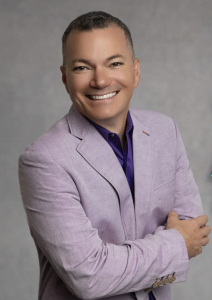
Despite that good news, publisher Rick Todd remains skeptical of Florida’s overall embrace of LGBTQ equality.
“Is Florida making progress on LGBTQ+ rights? Hard to say when the bar is set so low. The state legislature continues to introduce laws diminishing the community, and our streets were recently erased of all rainbows. So, probably not. It does not surprise me that our bigger cities score high on the index while more rural areas do not,” said Todd. “I am surprised however that Orlando received 100 percent when, to my knowledge, the LGBTQ+ liaison role has been vacant since Felipe Sousa Lazaballet left it some time ago.”
Jason Parsley, editor of OutSFL in Wilton Manors, echoed Todd’s sentiments. “Unfortunately, I don’t think the MEI applies much to Florida anymore. The state has targeted municipalities in an unprecedented way, oftentimes bullying them into submission. Some have attempted to fight back or find creative workarounds but the index, in its current form, is ill equipped to reflect the new reality in this state.”
There have been similar criticisms of the HRC report. According to the Philadelphia Gay News, “This year is the tenth in a row that Philadelphia has earned a perfect score — and that’s an achievement worth celebrating. But the simplified MEI metric doesn’t allow for more comprehensive or nuanced looks at municipal happenings.”
“For example, the MEI awarded Philadelphia all possible points for having an LGBTQ+ liaison in the city executive’s office. But Philly’s Office of LGBTQ+ Affairs has been vacant throughout most of this year. Celena Morrison-McLean, who was hired following an eight-month gap in 2020, resigned in November 2024. Her replacement, Tyrell Brown, began working in late spring 2025 but quickly departed in July amid a scandal after receiving an unsolicited, semi-nude photo from a more senior staffer.”
Ben Jodway, staff reporter for The Buckeye Flame, based in suburban Cleveland, Ohio, wrote, “506 cities across the nation were scored, including eight in Ohio. Four of those Ohio municipalities received perfect scores (Akron, Cincinnati, Columbus, Lakewood) which is down from six in 2024. 64 cities in the U.S. were called ‘All-Star Cities’ — including every Ohio city that is in the report — because they scored at least 85 points despite hailing from a state without statewide non-discrimination statutes that explicitly include sexual orientation and gender identity.”
“The average score for cities in Ohio is 96 out of 100 points. That average lands above the national average of 70, which is down from last year’s average of 72 because of cities capitulating to state and federal threats to suspend funding if they engage in what the government calls diversity, equity and inclusion work,” Jodway added.
Buckeye Flame editor Ken Schneck noted, “This sentence from Ben’s piece is of particular note: ‘No rural Ohio municipalities were included in the HRC’s report despite cities like Athens and Lorain passing resolutions in favor of gender-affirming care and bans on inflicting conversion therapy on minors,’ Municipalities can request to be included on the index.”
“As we move forward, we definitely have our eyes towards more rural municipalities being included in the MEI,” Schneck continued. “Many LGBTQ+ individuals living in rural areas simply do not have the option of moving to cities with perfect scores. Shining the spotlight on the policies/practices of these rural areas would help paint a more complete picture of where LGBTQ+ individuals are currently living.”
TOP STORY
Volume 27
Issue 11