Top 10 int’l LGBTQ stories of 2025: Trans travel danger depresses World Pride numbers
by Michael K. Lavers
(Michael K. Lavers is the international news editor of the Washington Blade. The following story appeared in the January 2, 2026, issue of the newspaper, and appears here with permission.)
The Trump-Vance administration and its policies had a significant impact on the global LGBTQ rights movement in 2025. War, anti-LGBTQ crackdowns, protests, and legal advances are among the other issues that made headlines around the world over the past year.
10. Australia ends ban on LGBTQ blood donors
Australia on July 14 ended its ban on sexually active LGBTQ people from donating blood. “Lifeblood (the Australian Red Cross Blood Service) has been working to make blood and plasma donation more inclusive and accessible to as many people as possible, whilst maintaining the safety of the blood supply,” said the Australian Red Cross Blood Service in a press release that announced the new policy. Lifeblood Chief Medical Officer Jo Pink said the new policy will allow 24,000 additional people to donate blood each year.
9. Kenyan judge rules gov’t must legally recognize trans people
A Kenyan judge on Aug. 20 ruled his country’s government must legally recognize transgender people and ensure their constitutional rights are protected. Justice Reuben Nyakundi of the Eldoret High Court in western Kenya ruled in favor of a trans athlete who was arrested in 2019 and forced to undergo a medical examination to determine her gender. The 34-year-old plaintiff who is a board member of Jinsiangu, a trans rights organization, said authorities arrested her at a health facility after they claimed she impersonated a woman.
“This is the first time a Kenyan court has explicitly ordered the state to create legislation on transgender rights, and a first in the African continent,” noted Jinsiangu in a statement. “If implemented, it could address decades of legal invisibility and discrimination faced by transgender persons by establishing clear legal recognition of gender identity, protection against discrimination in employment, housing, healthcare, and education, and access to public services without bias or harassment.”
8. U.S. withdraws from UN LGBTI Core Group
The U.S. in 2025 withdrew from the U.N. LGBTI Core Group, a group of U.N. member states that have pledged to support LGBTQ and intersex rights. A source told the Washington Blade the U.S. withdrew from the Core Group on Feb. 14. A State Department spokesperson later confirmed the withdrawal. “In line with the president’s recent executive orders, we have withdrawn from the U.N. LGBTI Core Group,” said the spokesperson.
7. Wars in Gaza, Ukraine continue to make headlines
Israeli airstrikes against Iran prompted authorities in Tel Aviv to cancel the city’s annual Pride parade that was scheduled to take place on June 13. The airstrikes prompted Iran to attack Israel with drones and missiles. One of them destroyed Mash Central, a gay bar that was located a few blocks from the U.S. Embassy in Tel Aviv. Marty Rouse, a longtime activist who lives in Maryland, was in Israel with the Jewish Federations of North America when the war began. He and his group left the country on June 15. Bet Mishpachah, an LGBTQ synagogue in D.C., welcomed the tenuous ceasefire between Israel and Hamas that took effect on Oct. 10, roughly two years after Hamas militants killed upwards of 1,200 people and kidnapped more than 200 others when they launched a surprise attack on the country.
In Ukraine, meanwhile, the war that Russia launched in 2022 drags on.
6. Int’l Criminal Court issues arrest warrants for Taliban leaders
The International Criminal Court on July 8 issued arrest warrants for two top Taliban officials accused of targeting LGBTQ people, women, and others who defy the group’s strict gender norms. The warrants are for Hibatullah Akhundzada, the Taliban’s supreme leader, and Afghanistan Chief Justice Abdul Hakim Haqqani. Karim Khan, the ICC’s chief prosecutor, in January announced a request for warrants against Taliban officials over their treatment of women and other groups since they regained control of Afghanistan in 2021. The request marked the first time the court specifically named LGBTQ people as victims in a gender persecution case before it.
5. Hundreds of thousands defy Budapest Pride ban
More than 100,000 people on June 28 defied the Hungarian government’s ban on public LGBTQ events and participated in the 30th annual Budapest Pride parade. Former Irish Prime Minister Leo Varadkar, who is his country’s first openly gay head of government, and openly gay MEP Krzysztof Śmiszek, who was previously Poland’s deputy justice minister, are among those who participated in the march.
Hungarian Prime Minister Viktor Orbán and his Fidesz-KDNP coalition government have faced widespread criticism over its anti-LGBTQ crackdown. Hungarian lawmakers in March passed a bill that bans Pride events and allow authorities to use facial recognition technology to identify those who participate in them. MPs in April amended the Hungarian constitution to ban public LGBTQ events.
4. LGBTQ delegation travels to Vatican to meet new Pope
The Vatican’s tone on LGBTQ and intersex issues softened under the late Pope Francis’ papacy, even though church teachings on homosexuality and gender identity did not change. The College of Cardinals on May 8 chose Pope Leo XVI, an American cardinal from Chicago who was bishop of the Diocese of Chiclayo in Peru from 2015-2023, to succeed Francis.
Leo on Sept. 1 met with the Rev. James Martin, a Jesuit priest who founded Outreach, a ministry for LGBTQ Catholics. A gay couple from D.C. — Jim Sweeney and the Rev. Jason Carson Wilson — are among those who took part in an LGBTQ pilgrimage to the Vatican a few days later that coincided with the church’s year-long Jubilee that began last Christmas Eve when Francis opened the Holy Door.
3. EU’s top court rules states must recognize same-sex marriages
The European Union’s top court on Nov. 25 ruled member states must recognize same-sex marriages legally performed in other member states. The EU Court of Justice in Luxembourg ruled in favor of a couple who challenged Poland’s refusal to recognize their German marriage. The couple who lives in Poland brought their case to Polish courts. The Polish Supreme Administrative Court referred it to the EU Court of Justice. “Today’s ruling of the Court of Justice of the EU is of key importance not only for the couple involved in the case, but also for the entire LGBT+ community in Poland,” said the Campaign Against Homophobia, a Polish LGBTQ and intersex rights group.
2. U.S. funding cuts devastate global LGBTQ community
The Trump-Vance administration’s decision to cut U.S. foreign aid spending in 2025 has had a devastating impact on the global LGBTQ rights movement. Council for Global Equality Chair Mark Bromley noted to the Blade that the U.S. historically funded roughly a third of the global LGBTQ rights movement. Groups around the world — including those that worked with people with HIV/AIDS — that received U.S. funding had to curtail programming or close altogether. LGBTQ+ Victory Institute President Elliot Imse earlier this year noted the global LGBTQ rights movement in 2025 was set to lose more than $50 million. “It is a catastrophe,” he said.
1. Countries boycott WorldPride amid travel advisories
Canada and a number of European countries in 2025 issued travel advisories for trans and nonbinary people who planned to visit the U.S.mThe advisory the Danish government issued notes President Donald Trump’s executive order that bans the State Department from issuing passports with “X” gender markers. It also notes “two gender designations to choose from: male or female” when applying for an ESTA (Electronic System for Travel Authorization) or visa for the U.S.
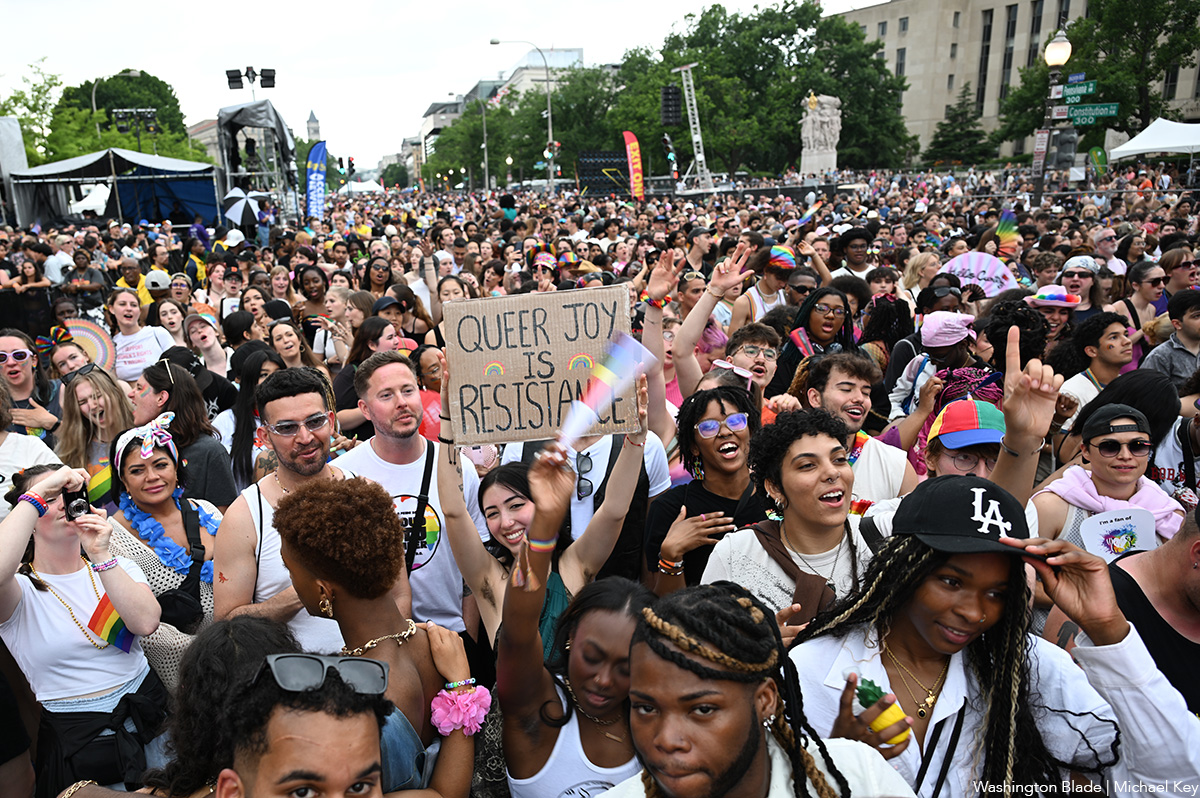
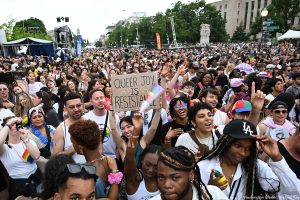
Egale Canada, one of Canada’s largest LGBTQ advocacy organizations, in February announced its members would not attend WorldPride, which took place in D.C. from May 17-June 8, or other events in the U.S. because of the Trump-Vance administration’s policies. Other advocacy groups and activists also did not travel to the U.S. for WorldPride. InterPride, which coordinates WorldPride, also issued its own travel advisory for trans and nonbinary people.
SPECIAL REPORT
Volume 28
Issue 1