Curve’s women’s health report shows discrimination a problem
by Joe Siegel
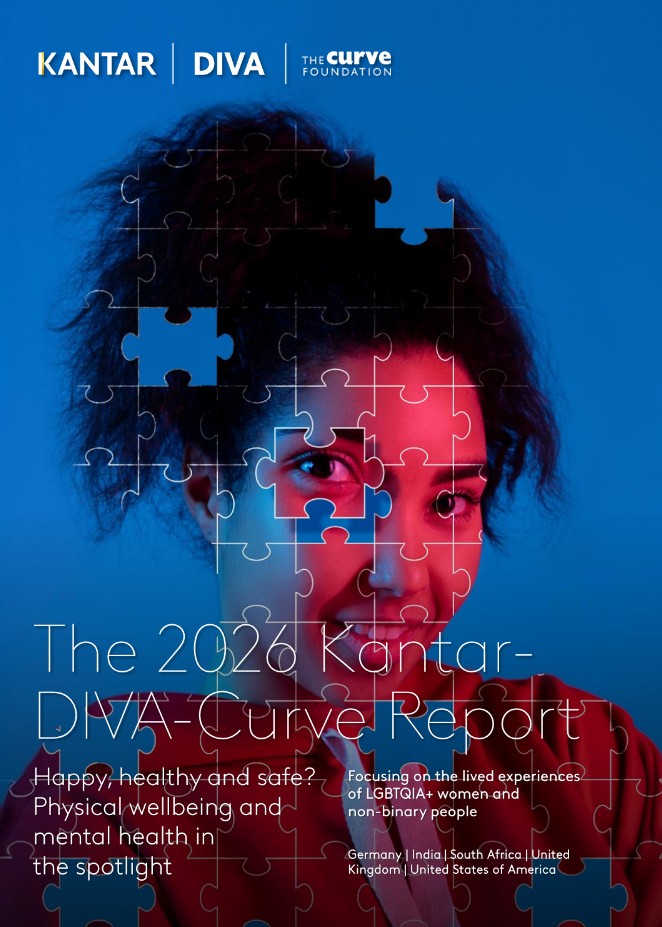
The 2026 Kantar-DIVA-Curve Report focuses on the experiences of LGBTQIA+ women and non-binary people in five countries, including Germany, India, South Africa, United Kingdom and the U.S.
The report was commissioned by Kantar, the DIVA Charitable Trust and The Curve Foundation. A total of 3000 respondents from five countries were surveyed in February 2026.
“Their experiences are often shaped by conditional safety, uneven access to care and the need to navigate systems that were not designed with them in mind,” the report noted.
Across all markets surveyed, discrimination in physical and mental health care persists, resulting in 33 percent of all respondents reporting they have delayed or avoided certain health care altogether.
Sixty-one percent of LGBTQIA women report experiencing discrimination in business environments, rising to 68 percent among those with disabilities.
In the U.S., the report notes over 600 anti-LGBTQIA bills were introduced in state legislatures in 2025. The bills were designed to limit access to gender-affirming healthcare, ban transgender participation in youth sports or public facilities and censor classroom discussions of LGBTQIA+ topics. Over half of the country’s states now restrict or outright ban gender-affirming health care.
In a section of the report devoted to advertising and media “branding,” while 50 percent of the respondents in the U.S. “believe brands are making an effort to be more diverse and inclusive, there is also growing fear that some companies have retreated from their LGBTQIA+ support.”
Franco Stevens, co-founder of The Curve Foundation and founder of Curve Magazine, is not surprised by the findings.
“We hear stories like these all the time at The Curve Foundation. The report does put numbers behind what our community has been saying for years,” said Stevens. “I was surprised by the lack of research being done on queer women’s mental and physical health. When more than 40 percent of LGBTQ+ women and nonbinary people say they’ve delayed or avoided medical care because they feared discrimination, that’s not an isolated problem, but a systemic one.”
“The places that make the most progress will be the ones that listen to LGBTQ+ people and include us in shaping the solutions,” said Stevens. “But frankly, I’m less interested in comparing countries and more interested in whether our community is thriving. If someone avoids going to the doctor because they’re afraid of how they’ll be treated, that’s a problem no matter where they live.”
Stevens noted the connection between the work of journalists and commissioning such a report. “At Curve, we believe that stories change culture and when our stories are told, our lives become harder to ignore. That’s true in healthcare, politics, media and everyday life. People deserve to be seen and treated with dignity.”
Stevens doesn’t have much optimism for change anytime soon, but has faith in the LGBTQ community to keep fighting inequality.
“The next year looks like an uphill battle,” Stevens added. “We’re living through a time when LGBTQ+ people, especially trans and nonbinary people, are increasingly targeted politically. That has real-world consequences for people’s health, safety and well being. At the same time, we are incredibly resilient. We keep showing up for one another, building community, and demanding better. That’s what gives me hope.”
IN THE NEWS
Volume 28
Issue 6